
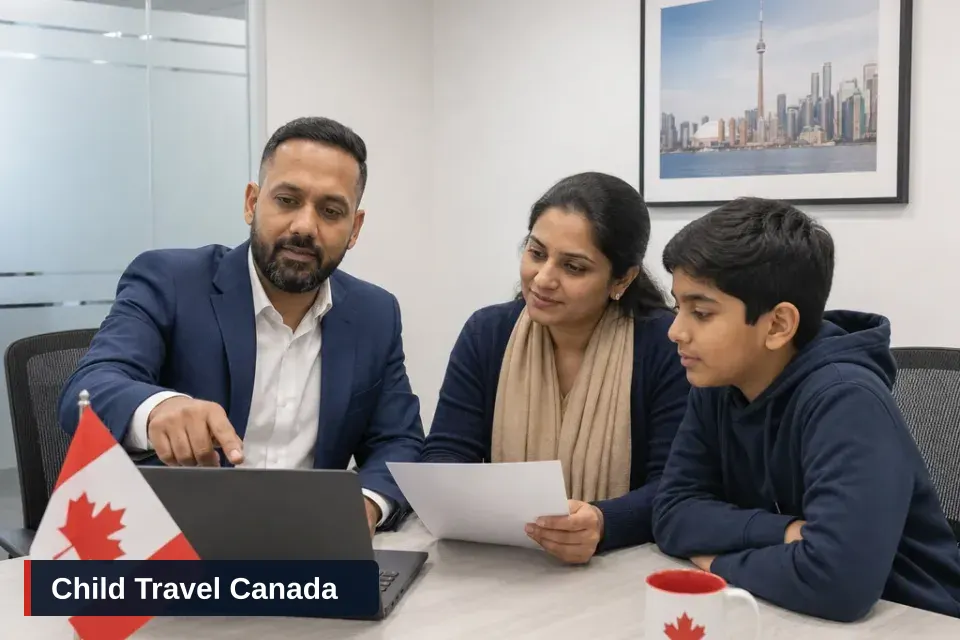
Yes — a child can travel to Canada alone, but requirements depend on the child’s nationality and travel method. You must have the child’s passport, an eTA or visitor visa if required, a signed travel consent letter (often notarized), custody documents where applicable, and the airline’s unaccompanied-minor arrangements ready before departure.
Do children need a visitor visa or eTA to enter Canada?
Whether a child needs a visitor visa, an Electronic Travel Authorization (eTA) or neither depends on their citizenship and how they travel to Canada (by air or by land/sea).
Essential documents for a child travelling alone to Canada
Prepare both original documents and several clear photocopies. Keep originals with the child and give copies to the accompanying adult or the person meeting them in Canada.
How to write a travel consent letter for a child (what to include)
A clear, signed consent letter (sometimes called a letter of authorization) is the single most important document to prevent delays at check-in or the border. Not all officials will demand notarization, but many airlines and visa offices prefer or require it.
| Element | What to include |
|---|---|
| Full names of both parents/guardians | Include full legal names exactly as they appear on passports or ID. |
| Child’s details | Full name, date of birth, passport number and nationality. |
| Travel dates and flight details | Departure and return dates, airline, flight numbers, and connecting flights if any. |
| Name, contact and address of Canadian guardian | Who will receive the child in Canada—include phone, email and a local address. |
| Purpose of travel and consent statement | A clear sentence that the parent(s) consent to the child travelling alone to Canada and authorise the named person to care for them. |
| Medical consent | Permission for medical treatment if needed, and details of allergies/medications. |
| Signatures and date | Signatures of both parents/guardians, dated. If a parent is unavailable, explain why and include supporting documents. |
| Notarization and translations | If possible, have the letter notarized and translated into English or French if it’s in another language. Some visa offices or airlines require notarization. |
Tip: Attach photocopies of the signing parents’ passports and the child’s birth certificate to the consent letter. Keep one photocopy with the child and another with the person meeting them in Canada.
Airline unaccompanied minor services vs travelling with an adult
Airlines have specific policies for unaccompanied minors (sometimes called ‘UM’ or ‘UMNR’ services). These services vary by carrier and can affect how you prepare the child for travel.
What happens at the Canadian border when a child arrives alone
A Border Services Officer (CBSA) will assess the child on arrival. Officers focus on verifying identity, consent to travel, admissibility and that someone will care for the child in Canada.
How to apply for a visitor visa for a minor (step-by-step)
If the child needs a TRV, follow the same official process you would for an adult, with child-specific documents included in the application. Always use IRCC’s official application pages.
Common mistakes VMC sees — and how to avoid them
These are practical errors that most often cause delays or refusals. Fixing them before travel will save time and stress.
Quick comparison: Airline UM service vs. travelling with an adult vs. professional chaperone
Frequently Asked Questions
Can one parent travel alone with a child if the other parent disagrees?
If the other parent has legal custody or a court order restricting travel, you must follow that order. If both parents share custody, it’s safest to have written consent from the non-travelling parent; without it there can be delays or refusal at the border.
Does a child need biometrics for a visitor visa or eTA?
Biometrics rules depend on the child’s nationality and the visa office processing the application. Some minors are exempt. Check IRCC’s biometrics page and the specific visa office instructions before applying.
Can a child travel on a grandparent’s passport?
No. Every traveller, including children, must have their own passport. The child’s passport information must appear on the ticket and in any visa/eTA application.
Who do I contact if the airline denies boarding for missing papers?
Ask the airline which document is missing and whether a notarized consent letter or other evidence would be accepted. If you can’t resolve it at the airport, contact the nearest Canadian visa office if the child is applying for a TRV, or IRCC web form if already approved. Keep copies of all communications.
Official pages to check before travelling: IRCC ‘Visit Canada’ and ‘Temporary Resident Visa’ pages, IRCC biometrics information, and the Canadian Border Services Agency (CBSA) guidance on arriving children. Also confirm the airline’s unaccompanied-minor policy and required forms.
VMC Recommendation
Because each family situation and country’s rules are different, have a licensed RCIC (Regulated Canadian Immigration Consultant) review the child’s travel documents and the consent letter before you book travel. A review can reduce the risk of denial at check-in or at the border — no guarantees, just personalised compliance and peace of mind.
Licensed RCIC · VMC Immigration Services · CICC R705959
Sanjay Singh Kumar is a Regulated Canadian Immigration Consultant (RCIC) licensed by the College of Immigration and Citizenship Consultants (CICC). He has guided thousands of clients through Express Entry, PNP, work permits, and family sponsorships.
Follow our updates on Google: add VMC as a preferred source to see our immigration news more often in Google Top Stories.