
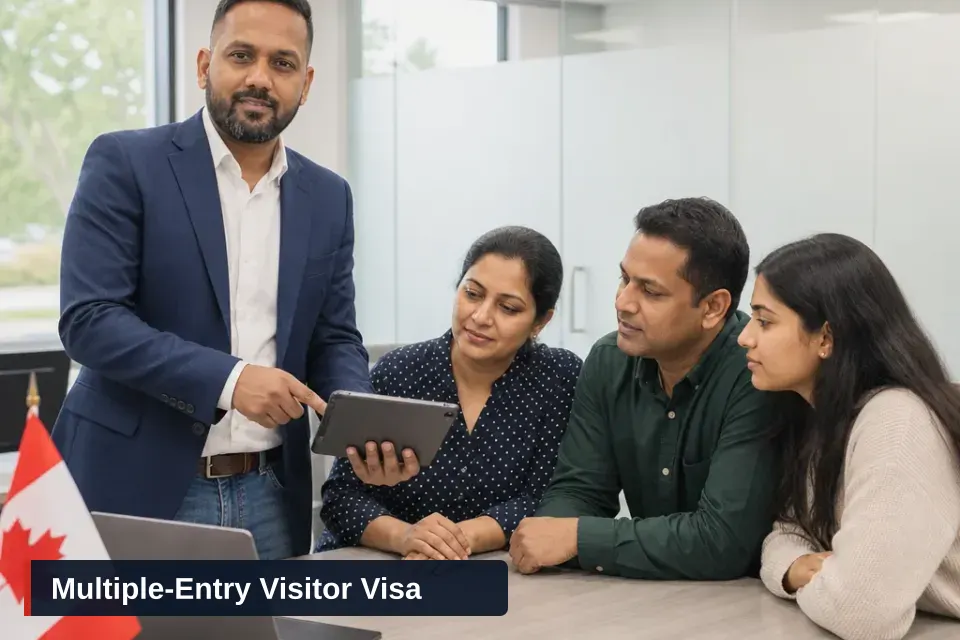
Yes—you can apply for a multiple‑entry visitor visa (also called a multiple‑entry TRV) when you submit your visitor visa application; IRCC will decide whether to issue single or multiple entries based on your file. To improve your chances, apply online, clearly request multiple entry, and include strong evidence of ties to your home country, travel history and funds to support your visits.
What is a multiple‑entry visitor visa and who needs one?
A multiple‑entry visitor visa (TRV) allows you to enter Canada more than once during the visa’s validity without needing a new visa for each trip. It’s useful if you plan to travel frequently—for example to visit family, attend recurring business meetings, or make repeated short stays between work or study abroad. Note: visa‑exempt travellers use an eTA and don’t need a TRV.
Step‑by‑step: How to apply for a multiple‑entry visitor visa
- 1Check whether you need a TRV or an eTA (see IRCC: “Do you need a visitor visa?”).
- 2Create or sign in to your IRCC account (GCKey or Sign‑In Partner) and start the application for a Temporary Resident Visa (IMM 5257 or the online equivalent).
- 3When asked about entries, indicate you are applying for multiple‑entry or say you need to travel more than once (follow the form prompts).
- 4Collect supporting documents (passport, photos, proof of ties to home, proof of funds, travel itinerary, invitation letter if any).
- 5Pay the application fee and biometrics fee (if required) and submit your application electronically.
- 6Attend a biometrics appointment at a Visa Application Centre (VAC) if instructed.
- 7Wait for a decision; if approved, you’ll receive a visa sticker in your passport (VAC or visa office will advise how to return your passport).
Always confirm the current application steps and forms on the IRCC page “Visit Canada: How to apply for a visitor visa, study or work permit” because online forms and wording change from time to time.
Documents that make a multiple‑entry application stronger (checklist)
- Passport: valid for the full period you request, and previous passports showing travel history if available.
- Two passport photos meeting IRCC specifications (if asked).
- Completed visitor visa application form and family information form (online or IMM 5257 as required).
- Cover letter: short, clear explanation why you want multiple entries and how often you plan to visit.
- Proof of ties to home country: employment letter with approved leave dates, recent pay stubs, property titles, enrollment letters for students, or family responsibilities.
- Proof of funds: recent bank statements, fixed deposits, salary slips, or sponsor’s financial documents with an affidavit of support.
- Travel history: visas or entry/exit stamps for Canada, USA, Schengen, UK, Australia or other countries—these are persuasive evidence of compliance with other countries’ rules.
- Invitation letter (when visiting family/friends or for business): include host’s name, status in Canada (citizen/PR/work permit), contact details, relationship and planned visit dates; attach host’s ID copy (PR card or citizenship) or work permit.
- Purpose evidence: conference registration, business meeting invitations, medical appointment letters, or flight and hotel bookings (optional but useful).
- Translations: any non‑English/French documents must include certified translations.
How IRCC decides single vs multiple entry (what officers look for)
Officers make a discretionary decision using the information on your application. Key factors they consider include your travel and visa history, strength of ties to your home country, the credibility of your stated purpose and whether you pose a risk of overstaying. Having a history of lawful travel to Canada, the USA, Schengen or the UK makes multiple‑entry much more likely.
Practically speaking, when officers grant multiple entries they often issue a visa valid for up to 10 years or until the passport expires (whichever comes first). This was standard practice at the time of writing—confirm current details on IRCC’s visitor visa pages.
Common mistakes VMC sees — and how to avoid them
- Weak ties claim: submitting vague or outdated employment letters. Fix: provide a recent on‑company letter with position, salary, approved leave dates and contact details.
- Missing travel history: not including old passports or previous visas. Fix: submit copies of old passports or printouts showing prior entries/stamps.
- Poor invitation letters: informal notes without detail. Fix: ask your host to write a formal invitation including their status in Canada and supporting ID.
- Inconsistent dates or reasons: different travel dates across documents. Fix: reconcile and explain any discrepancies in a cover letter.
- Insufficient funds documentation: bank printouts with no explanation. Fix: add salary slips, employer confirmation, or sponsor documents with a signed statement.
- Ignoring biometrics: not attending VAC appointment on time. Fix: book and attend biometrics promptly to avoid delays.
- Assuming approval at port of entry: some applicants think a visa guarantees entry. Fix: understand Canada Border Services Agency (CBSA) makes the final decision on arrival.
- Undeclared previous refusals or removals: hiding past refusals or immigration problems. Fix: disclose and provide supporting explanations or GCMS notes if available.
If your request for a multiple‑entry visa is refused: practical alternatives
A refusal can be for a single‑entry or for any entry request. You can reapply with stronger evidence; there is no formal appeal process for visitor visa refusals. Before reapplying, order your GCMS notes (IRCC: “Get your GCMS notes”) to understand the officer’s reasons, and correct the issues they identified.
- Reapply with new, clearly labelled evidence responding to the refusal reasons.
- Consider applying for one trip at a time (single‑entry) if frequent travel causes concern—once you establish compliance, multiple entries may be granted later.
- If there are exceptional compassionate reasons, include supporting documents (medical letters, urgent family matters).
- If you believe an error was made, seek legal advice; in rare cases you may request ministerial intervention, but this is exceptional and not a routine option.
| Feature | Single‑entry | Multiple‑entry |
|---|---|---|
| When to request | If you plan one trip or have a short, specific purpose | If you plan repeated visits over months or years |
| Best for | One‑time visitors, short business trips, medical travel | Family visitors, frequent business travellers, people with ongoing ties to Canada |
| Validity | Usually for one trip only | Often valid for multiple years (officer decides) |
| Ease of future travel | Need a new visa for each trip (if from a visa‑required country) | No new visa needed while the TRV is valid |
Frequently Asked Questions
Can I ask IRCC for a specific visa validity (for example 5 years)?
You can request a specific validity in your cover letter, but the final decision and length are at the visa officer’s discretion. Officers balance passport expiry, your travel record and the purpose of visits.
Does having a multiple‑entry visa guarantee I can stay for long on each visit?
No—each time you arrive, a border officer decides how long you can remain. Typically officers allow up to six months per visit, but the exact length is recorded on your entry stamp or visitor record.
Will previous study or work permit applications affect my visitor visa?
Yes. A current or recent work/study permit in Canada can either support your application (showing legitimate ties) or raise questions about intent. Provide documentation explaining your status and why you will return home between visits.
Is travel medical insurance required?
IRCC doesn’t require proof of travel medical insurance for a TRV, but having insurance is strongly recommended and it can support an application by showing you can cover health emergencies during your stays.
VMC Recommendation
If you want a multiple‑entry visitor visa or if you have a previous refusal, get a licensed RCIC to review your file and documents before you apply. Small details in invitation letters, employment proofs or cover letters make a big difference; a review will identify weak spots and suggest targeted evidence for your situation. Book a consultation with Sanjay Singh Kumar, RCIC at VMC Immigration (in‑person in Brampton or online).
Licensed RCIC · VMC Immigration Services · CICC R705959
Sanjay Singh Kumar is a Regulated Canadian Immigration Consultant (RCIC) licensed by the College of Immigration and Citizenship Consultants (CICC). He has guided thousands of clients through Express Entry, PNP, work permits, and family sponsorships.
Follow our updates on Google: add VMC as a preferred source to see our immigration news more often in Google Top Stories.