
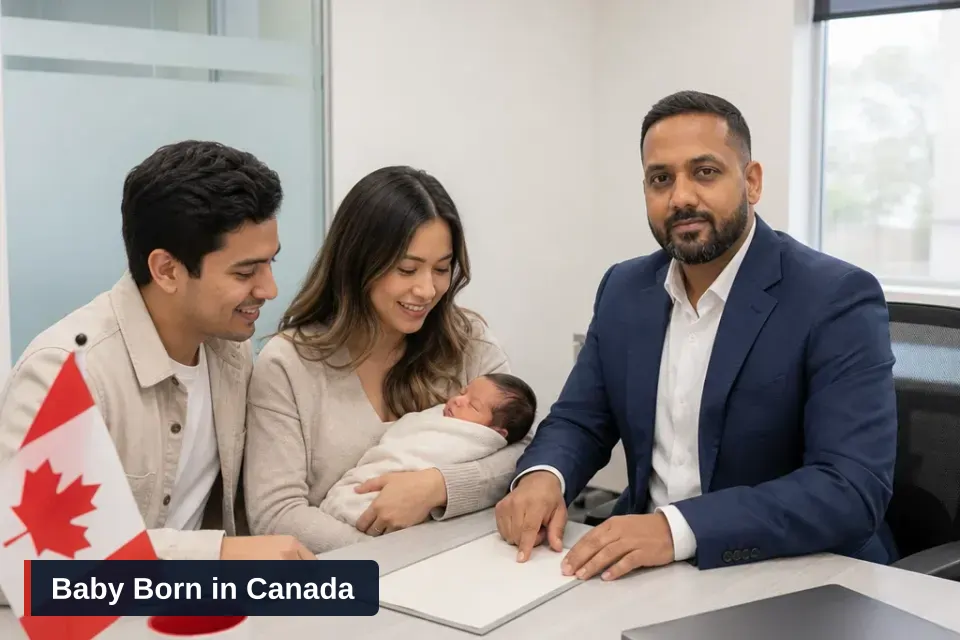
Yes — in almost every case a child born on Canadian soil is a Canadian citizen at birth. There are two narrow exceptions (children born to accredited foreign diplomats and certain representatives), so check the details below. This article explains who qualifies, what official documents prove your baby’s citizenship, step-by-step actions to get those documents and the common mistakes parents make.
Who is automatically a Canadian citizen at birth?
If your baby is born inside Canada, they are automatically a Canadian citizen unless an exception applies. That means most babies born to temporary residents, visitors, refugees, permanent residents and Canadian citizens are citizens at birth. The most common way parents prove that status is a provincial or territorial birth certificate.
What are the important exceptions?
- Children born in Canada to parents who are foreign diplomats accredited to Canada are not Canadian at birth. The diplomatic status must be official and current at the time of birth.
- Children born to certain representatives of a foreign country (for example, consular officers with specific protections) may also be excluded. These exceptions are narrow and based on international diplomatic rules.
If you think diplomatic status might apply to either parent, check the parent’s accreditation documents and visit the IRCC page “Citizenship and diplomatic or consular representatives” or ask an RCIC to confirm. Do not rely only on verbal advice from hospital staff.
How to prove your child's Canadian citizenship: your document options
You have three practical ways to prove your baby is Canadian when you need to: a provincial/territorial birth certificate, a Canadian passport for the child, or an IRCC proof of citizenship (citizenship certificate). Which one you need depends on the situation.
| Document | Who issues it | When to use it | How to apply |
|---|---|---|---|
| Provincial/territorial birth certificate | Vital Statistics office in the province/territory where your baby was born | Most everyday needs: health card, daycare, school registration, proof of citizenship for many services | Apply through your provincial/territorial Vital Statistics website after registration of the birth (hospital will usually give instructions) |
| Canadian passport (child) | Passport Canada (IRCC delivers passports) | International travel and many federal processes that require a travel document | Apply using Passport Canada’s child passport application — you’ll need the baby’s birth certificate, photos and parental consent |
| IRCC proof of citizenship (citizenship certificate) | Immigration, Refugees and Citizenship Canada (IRCC) | When a federal document is specifically requested or if you cannot get a birth certificate; useful when dealing with IRCC directly | Check IRCC’s page “Apply for proof of Canadian citizenship” for the current form and required documents |
Step-by-step: getting official proof for your newborn
- 1Register the birth: Most provinces require the birth to be registered soon after delivery. The hospital usually gives a form and instructions; follow them and keep copies.
- 2Order a birth certificate: After registration, apply to the provincial Vital Statistics office for a long-form birth certificate. This is the simplest, quickest proof of citizenship for most needs.
- 3Apply for a passport if you plan to travel: To leave or re-enter Canada you must have a passport for the child. Prepare passport photos that meet Passport Canada’s child photo rules and get parental consent where required.
- 4If you cannot get a birth certificate or you are dealing directly with IRCC: check IRCC’s “Apply for proof of Canadian citizenship” page and prepare the documents they list (IDs, birth evidence, parental documents).
- 5Keep copies and record the child’s details: Save certified copies and make a note of the child’s Canadian documents (birth certificate number, passport number) for future applications (school, benefits, travel).
Common mistakes parents make (and how to avoid them)
- Assuming a hospital-issued paper proves citizenship: a hospital record helps register the birth, but it is not the same as a provincial birth certificate.
- Waiting too long to register: each province has its own deadline for basic versus delayed registration; delayed registration can cost more and require additional documents.
- Using inconsistent names: use the child’s legal given name consistently when applying for the birth certificate and passport to avoid delays.
- Not checking diplomatic status: if a parent is a foreign diplomat, do not assume the child is Canadian — confirm accreditation paperwork.
- Trying to travel without a passport: even if the child is a Canadian citizen, you must have a valid Canadian passport to board international flights.
If you plan to travel home soon after birth, apply for the child’s passport as early as you can — the birth certificate is usually needed as part of that passport application.
When might you need an IRCC proof of citizenship instead of a birth certificate?
A provincial birth certificate is enough for most provincial and federal services, but you may prefer or require an IRCC-issued proof of citizenship in some cases (for example, certain federal immigration processes, or if you cannot obtain a birth certificate). If you think you need a federal citizenship document, consult the IRCC page “Apply for proof of Canadian citizenship” and follow their document checklist.
Frequently Asked Questions
Does a child born in Canada to temporary residents need a visa to return to Canada?
No. If the child is a Canadian citizen by birth they do not need a visa to enter Canada. However, to travel on planes you must have a valid Canadian passport for the child to board and clear border controls.
Can my child lose Canadian citizenship later?
Loss of citizenship for someone born in Canada is rare and typically linked to fraud or misrepresentation when obtaining citizenship documents. Ordinary births on Canadian soil are secure grounds for citizenship.
Do I include a baby born in Canada on my parent’s immigration or PR forms?
No. A baby who is a Canadian citizen by birth is not a dependent for immigration purposes in the same way foreign-born children are. If you are applying for someone else’s immigration application, check the specific form instructions.
My baby was born in Canada but I don’t have the hospital paperwork. What now?
Contact the hospital’s birth records office and your provincial Vital Statistics. You may be able to register the birth with alternate documents (IDs, affidavits). If that fails, check IRCC’s proof-of-citizenship page for next steps.
Official sources to check: IRCC’s “Apply for proof of Canadian citizenship” page, Passport Canada pages for child passports, and the Vital Statistics office website for the province or territory where your child was born.
VMC Recommendation
If you are unsure which document is best for your situation, or if a parent’s diplomatic or unusual status might affect the child’s citizenship, have a licensed RCIC (like those at VMC Immigration) review your case. We can confirm the right documents, check application forms, and help avoid the common mistakes listed above.
Licensed RCIC · VMC Immigration Services · CICC R705959
Sanjay Singh Kumar is a Regulated Canadian Immigration Consultant (RCIC) licensed by the College of Immigration and Citizenship Consultants (CICC). He has guided thousands of clients through Express Entry, PNP, work permits, and family sponsorships.
Follow our updates on Google: add VMC as a preferred source to see our immigration news more often in Google Top Stories.