
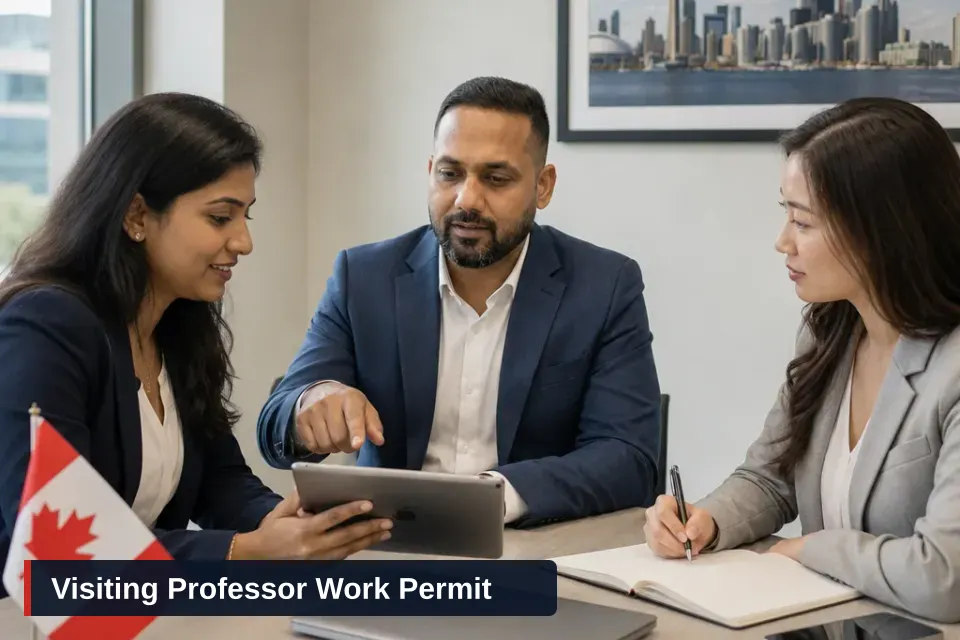
Short answer: sometimes. If you will be carrying out paid work, supervising students for credit, or otherwise filling a position for a Canadian employer, you will usually need a work permit. If you are coming for a short unpaid visit (guest lecture, conference presentations, informal research meetings), you may be able to enter as a visitor or business visitor instead. Read the rest of this guide to see the main options, a practical application checklist and common mistakes to avoid.
Do visiting professors need a work permit in Canada?
Whether you need a work permit depends on what you will do in Canada, how you will be paid, and the length of your stay. Key principles: paid employment and activities that form part of a Canadian academic programme usually require a work permit. Short unpaid activities, giving a few guest lectures or attending conferences are often possible on a visitor or business-visitor entry. You must check the exact nature of your activities with the host institution and confirm on the IRCC work permit pages.
Main routes for visiting professors and researchers
- Employer‑specific work permit (LMIA‑based): The Canadian employer (university or research institute) obtains a positive Labour Market Impact Assessment (LMIA) when required, then you apply for a work permit tied to that employer.
- LMIA‑exempt work permit via the International Mobility Program (IMP): There are several LMIA exemptions used frequently in academia — for example, intra‑university exchanges, reciprocal academic arrangements or positions that bring significant cultural, social or economic benefit to Canada. These exemptions are technical and must match the facts of your placement.
- Exchange agreements / international mobility exemptions: If your host and home institutions have an official research or exchange agreement, that may allow an LMIA exemption. The agreement should be clear about the exchange terms and funding.
- Short-term visit as a business visitor or guest lecturer: If your activity is limited to giving lectures, attending meetings or conferences without entering into a Canadian employment relationship, you may come as a visitor. Visitor rules do not allow you to accept employment or register for a programme that awards academic credit.
- Intra‑company transfer (ICT): If you’re employed by a multinational academic institution and transferring to a Canadian branch, an ICT route may be possible.
- Study permit (rare): If your role includes registered study, or you will be enrolled in a program as a student, a study permit may be required instead of a work permit.
How to apply: step‑by‑step checklist
- 1Clarify the role and funding with the host: get a written letter of invitation or job offer that explains duties, start and end dates, salary or honorarium, reporting lines and whether students’ supervision will be part of your duties.
- 2Decide whether an LMIA is required: ask the host to check with their HR or international office; if an LMIA is needed the employer will apply to ESDC. If the employer believes an LMIA exemption applies, obtain detailed written justification.
- 3Prepare your supporting documents: see the Documents checklist below. The host institution’s letter and any exchange agreements are essential.
- 4Choose where to apply: from outside Canada you usually apply online to IRCC; in some narrow cases you may be able to apply at a port of entry or from inside Canada — check IRCC guidance for your situation.
- 5Complete the IRCC work permit application and pay fees: follow the IRCC work permit application steps, complete forms and upload your documents. Be ready for biometrics and possible medical exams if IRCC requests them.
- 6Wait for a decision and prepare travel: if approved, follow the instructions in the approval letter and ensure you carry the original invitation/contract when travelling. If a visa or electronic travel authorisation (eTA) is required, get it before travel.
- 7Comply at entry and during your stay: follow the conditions on your work permit; do not work for employers or perform duties outside the permit unless you obtain an amendment or a new permit.
Documents checklist for visiting professors
- Passport biodata page (valid for the intended stay).
- Letter of invitation or job offer from the Canadian institution: duties, dates, salary/honorarium, contact details and whether the role includes supervising students or academic credit.
- If employer required an LMIA: a copy of the positive LMIA and the employer’s LMIA application number.
- If employer claims an LMIA exemption: a formal explanation from the host institution explaining which exemption applies and why (for example, an exchange agreement or reciprocal arrangement).
- Academic CV, diplomas and publications that establish your academic standing and justify the position.
- Proof of funding: grant letters, employer payroll letter or fellowship funding.
- Previous Canadian visas / electronic travel authorisations, if any.
- Police certificates or medical exam results, if requested by IRCC.
- Evidence of ties to home institution and intent to return (for temporary visits): appointment letter from home university, leave approval, ongoing research projects, return ticket or funding terms).
Common mistakes VMC sees — and how to avoid them
- Mistake: Treating a paid supervising role as a visitor activity. Avoidance: If you will supervise students for course credit or receive payment from the Canadian institution, plan for a work permit application.
- Mistake: Relying on a vague invitation letter. Avoidance: Get a detailed invitation or contract that states duties, funding, start/end dates and whether the appointment is paid.
- Mistake: Assuming all academic visits are LMIA‑exempt. Avoidance: Ask the employer to document the exact legal basis for any LMIA exemption and check IRCC guidance — exemptions are specific and must match the facts.
- Mistake: Missing biometrics, medicals or police certificates requested later. Avoidance: Respond quickly to IRCC requests and monitor your online account so processing is not delayed.
- Mistake: Arriving with intentions that differ from the approved permit. Avoidance: Read permit conditions carefully and apply to change or extend your status before you begin new duties.
Quick comparison: visitor, work permit, and exchange arrangement
Where to check official guidance
Always confirm your situation on the official IRCC pages: the general work permits page and the section on LMIA exemptions / International Mobility Program. Employers should check Employment and Social Development Canada (ESDC) guidance for LMIA applications. If your visit is part of an institutional exchange, ask your host university’s international office for any institutional procedures and for their experience supporting similar visits.
Frequently Asked Questions
Can I give a single public lecture in Canada without a work permit?
Yes — many short, unpaid public lectures or conference presentations fit the visitor or business‑visitor rules. But if the visit is paid, or you will supervise students for course credit, you likely need a work permit.
Can a Canadian university arrange an LMIA for a visiting researcher?
Yes — a university employer can apply for an LMIA when the role is a paid position and ESDC’s tests require it. However, many academic visits use LMIA exemptions; the employer should confirm which route applies and provide written documentation.
How long does it take to get a visiting professor work permit?
Processing times vary by country of application and the specific route (LMIA vs LMIA‑exempt). Because times change, check the IRCC processing times page and plan travel only after you receive the official approval.
Can I change from visitor status to a work permit from inside Canada?
In some cases you can apply from inside Canada, but eligibility depends on your current status and the nature of the intended work. Check IRCC’s guidance for applying from inside Canada and consider working with your host university and an RCIC to confirm the right pathway.
Tip: get the host institution’s international office and HR to prepare the exact wording IRCC expects in invitation letters or exemption explanations. Vague letters are a leading cause of delays.
VMC Recommendation
If you are unsure whether your academic visit needs a work permit or which LMIA exemption (if any) applies, have a licensed RCIC review your invitation/offer and the facts of your placement. An RCIC can help your host institution draft the correct documents and reduce the risk of refusal or delay. VMC Immigration Services offers consultations in Brampton or online.
Licensed RCIC · VMC Immigration Services · CICC R705959
Sanjay Singh Kumar is a Regulated Canadian Immigration Consultant (RCIC) licensed by the College of Immigration and Citizenship Consultants (CICC). He has guided thousands of clients through Express Entry, PNP, work permits, and family sponsorships.
Follow our updates on Google: add VMC as a preferred source to see our immigration news more often in Google Top Stories.