
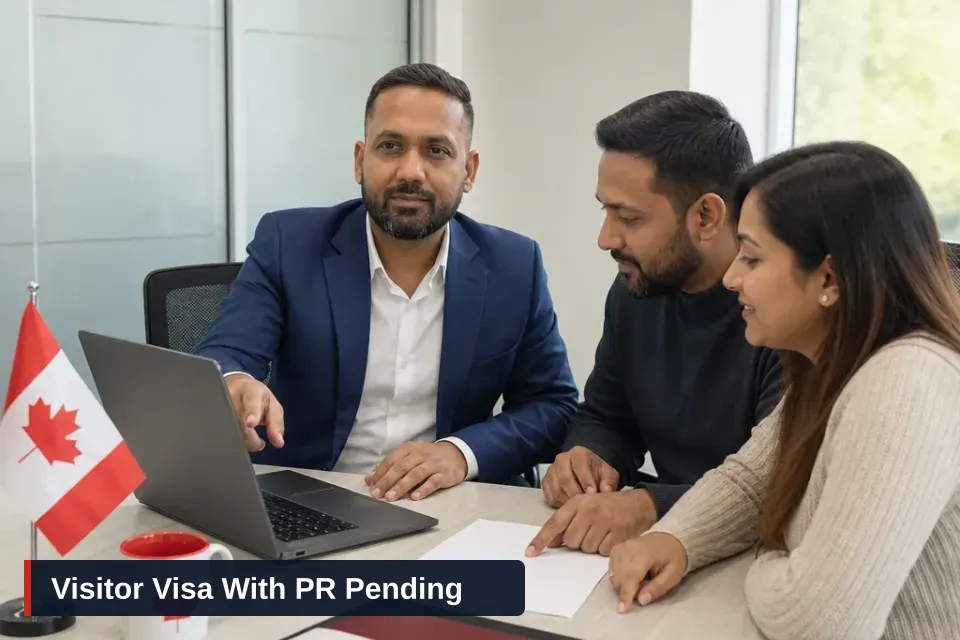
Yes — you can apply for a visitor visa (temporary resident visa, TRV) while a Canadian permanent residence application is pending, but you must tell IRCC about the PR application and clearly address the issue of "dual intent." Be ready to prove your trip is temporary with strong evidence of purpose, funds and ties to your home country; failing to do so is the most common reason for refusal.
What is "dual intent" and how does it affect your visitor visa?
Dual intent means you have both a genuine desire to enter Canada temporarily and a separate intention to immigrate permanently. Canadian immigration law recognises dual intent — having a pending PR application does not automatically bar you from getting a visitor visa — but you must show the visa officer that your current travel is temporary and you will respect the visitor conditions. That means proving a clear purpose for your visit, sufficient funds and significant ties and obligations that will return you home when the visit ends.
Documents you must include when applying for a visitor visa with a pending PR
- Passport(s) valid for the intended stay and copies of previous passports with travel stamps.
- IRCC proof of your pending PR application: Acknowledgement of Receipt (AOR), confirmation letter, UCI or file number and any visa office correspondence.
- A clear, concise cover letter explaining the purpose and dates of your trip, why it is temporary and how it fits with your PR process (for example: attending a family event, temporary business meeting, medical appointment, or short holiday).
- Proof of ties to your home country: employment letter, pay slips, property ownership documents, enrolled dependants at home, study enrolment letters, or business ownership documents.
- Proof of funds for the trip: recent bank statements, sponsor letters (if someone in Canada will pay), or travel credit cards.
- Invitation letter from the person you will visit in Canada (if applicable) that includes their status in Canada, address, contact details, the relationship to you and who pays for what.
- Return travel reservations or an itinerary (show a realistic return date consistent with your visitor purpose).
- Any supporting documents relevant to the visit: medical or hospital appointment confirmations, funeral proof, conference registration, or hotel bookings.
- Biometrics receipt, photos, and other documents required by the visa office for your country. Check your local visa office instructions on the IRCC website.
- If you hold a valid temporary status in another country (work or study permit), include proof; this can strengthen your case for short-term travel.
Step-by-step: How to apply for the visitor visa while PR is pending
- 1Check whether you need a TRV or an eTA: Most nationals from visa-exempt countries need only an eTA, but if your PR application file shows you need a TRV, follow the visa office rules. Use the IRCC page “Visit Canada — Do you need a visitor visa?” to confirm.
- 2Gather the documents listed above, including a clear cover letter that mentions your PR file number and AOR date.
- 3Apply online via your IRCC account (recommended) or on paper if your visa office requires it. Make sure to disclose your PR application details on all relevant forms.
- 4Pay the application fees and book biometrics if required. Biometrics requirements depend on your country and past submissions; check IRCC’s biometrics page and your visa office instructions.
- 5After submission, monitor your IRCC account and the visa office portal for messages. Respond promptly to any request for additional documents.
- 6If the visa is approved, check the stamping instructions carefully. A TRV is usually stamped into your passport by the visa office; follow their return shipping or pick-up instructions.
- 7If your application is refused, the visa office will usually send a refusal letter with reasons. You can reapply with stronger evidence or seek advice from an RCIC before reapplying.
Common mistakes VMC sees — and how to avoid them
- Not disclosing the PR application: Always declare a pending PR file. Omitting it can be considered misrepresentation.
- Weak cover letter: Don’t assume the visa officer knows why you need to visit. Explain the purpose, dates, who will pay and how the trip is temporary.
- Relying only on your PR application as proof of future ties: A PR file shows long-term intent, not short-term ties. Provide independent evidence you will return home (job letter, property, family).
- Inconsistent dates or documents: Make sure your itinerary, employer permission, medical appointments and PR timelines don’t conflict.
- Missing biometrics or local requirements: Check the visa office instructions on the IRCC website for your country. A missed biometrics request delays or cancels processing.
- Applying too close to travel without giving time for processing: Visitor visa processing varies by country. For urgent travel, see the section below on urgent travel options.
If you need to travel urgently during PR processing
If you must travel for an emergency (medical, funeral, urgent business), apply as early as possible and include documentary proof of urgency in your cover letter and supporting documents. If you already applied and need a decision fast, contact the visa office to request urgent processing — include evidence of the emergency. Some visa offices provide expedited service for urgent humanitarian or compassionate reasons, but this is discretionary.
Tip: If your PR application requires you to submit passports later to the visa office (for visa issuance), confirm timing before you travel. Sending your passport away while you are abroad can prevent visa stamping or cause delays in PR final steps.
How a pending PR application affects entry at the port of entry
A visitor visa or eTA only allows you to seek entry as a temporary visitor. When you arrive at a Canadian port of entry, the border services officer (CBSA) will decide whether you meet the requirements for a temporary stay. They will consider the same evidence: purpose, ties, funds and your PR file. Be honest with the officer about your PR application and carry the same documents you gave to IRCC. A pending PR file does not automatically mean you will be refused at arrival, but be prepared to answer how this trip is temporary.
| Document | When you need it | What a pending PR application means |
|---|---|---|
| TRV (stamped in passport) | Citizens of visa‑required countries who will travel to Canada. | You must disclose PR application on your TRV application; officer will assess dual intent. |
| eTA | Citizens of visa‑exempt countries flying to Canada. | eTA applications do not have a formal long application package; but be ready to show PR file and supporting documents at boarding and arrival. |
| Visitor record (staying in Canada) | If you apply to extend or change conditions while already in Canada. | A visitor record does not give status if you applied after expiry; disclose PR status and meet extension rules. |
Frequently Asked Questions
Will having a PR application make it harder to get a visitor visa?
Sometimes. A pending PR application shows you intend to immigrate, which raises the question of whether your visit is truly temporary. You must provide clear evidence of short‑term plans and strong ties to your home country to overcome that concern. IRCC recognises dual intent, but you must convince the visa officer that you will leave after the visit.
Should I include my PR receipt (AOR) in the visitor visa application?
Yes. Always include your PR AOR, file number and any correspondence with the visa office. Transparency is essential; hiding the PR application can lead to a refusal or allegations of misrepresentation.
If my visitor visa application is refused, does it affect my PR application?
A TRV refusal does not automatically stop a PR application, but the reasons for refusal (for example, concerns about credibility or misrepresentation) may be relevant if shared facts are inconsistent. If refused, consider getting professional advice before reapplying to avoid repeating the same issues.
Can I apply for a visitor visa from inside Canada while my PR is being processed?
Yes, you can apply to extend or change your visitor status from inside Canada if you meet the rules, and you must disclose your PR file. Processing and eligibility differ from applications made outside Canada, so check IRCC’s “Extend your stay in Canada as a visitor” page for details.
Always check the IRCC pages named “Apply for a visitor visa (temporary resident visa)” and “Dual intent” for the most current instructions. Visa office instructions and biometrics requirements differ by country and change over time.
VMC Recommendation
Before you apply, have a licensed RCIC review your visitor visa application and cover letter alongside your PR file. An RCIC can help you present a clear explanation of dual intent, select the strongest supporting evidence, and reduce the risk of refusal or delays.
Licensed RCIC · VMC Immigration Services · CICC R705959
Sanjay Singh Kumar is a Regulated Canadian Immigration Consultant (RCIC) licensed by the College of Immigration and Citizenship Consultants (CICC). He has guided thousands of clients through Express Entry, PNP, work permits, and family sponsorships.
Follow our updates on Google: add VMC as a preferred source to see our immigration news more often in Google Top Stories.